Search this site
1378 results found with an empty search
- Teasel (Dipsacus fullonum)
A purple/violet flower with 4 petals Flowers Teasel (Dipsacus fullonum) A purple/violet flower with 4 petals
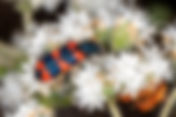
- Checkered Beetle (Trichodes alvearius)
The Checkered Beetle (Trichodes alvearius) is a brightly coloured insect found in parts of Europe, where it is also known as the "bee-hive beetle". Adults are often seen on flowers, while their larvae are parasites in the nests of solitary bees and wasps. Checkered Beetle (Trichodes alvearius) Beetles The Checkered Beetle (Trichodes alvearius) is a brightly coloured insect found in parts of Europe, where it is also known as the "bee-hive beetle". Adults are often seen on flowers, while their larvae are parasites in the nests of solitary bees and wasps.
- Common Blue (Polyommatus icarus)
The Common Blue (Polyommatus icarus) is a member of the family Lycaenidae. It is a small butterfly and very different in colour to the male. It can easily be mistaken for a Brown Argus, and vice versa. Have a look in the 'Lycaenidae' section under 'Butterfly Composites' for a link to see a detailed comparison between the two species. Butterflies Common Blue (Polyommatus icarus) A small, brown/blue butterfly in the family Lycaenidae (Gossamer-winged butterflies) The Common Blue (Polyommatus icarus) is a member of the family Lycaenidae. It is a small butterfly and very different in colour to the male. It can easily be mistaken for a Brown Argus, and vice versa. Have a look in the 'Lycaenidae' section under 'Butterfly Composites' for a link to see a detailed comparison between the two species. Months seen on Corfu Jan Feb Mar Apr May Jun Jul Aug Sep Oct Nov Dec 🦋 🦋 🦋 🦋 🦋 🦋 🦋 🦋 Periods can vary with location and seasonal weather
- Bitter Waxcap (Hygrocybe mucronella)
The Bitter Waxcap (Hygrocybe mucronella) is a small, orange-red mushroom known for its extremely bitter taste, which is a key identification feature. It grows in old, unimproved grasslands during autumn and is considered vulnerable due to habitat loss. It has a slightly sticky cap and stem and deep red gills. Fungi Bitter Waxcap (Hygrocybe mucronella) The Bitter Waxcap (Hygrocybe mucronella) is a small, orange-red mushroom known for its extremely bitter taste, which is a key identification feature. It grows in old, unimproved grasslands during autumn and is considered vulnerable due to habitat loss. It has a slightly sticky cap and stem and deep red gills.
- Shield Bug (Odontotarsus robustus)
The Shield Bug (Odontotarsus robustus) is a species of shield-backed bug, a type of true bug (order Hemiptera) found in parts of mainland Europe. Shield-backed bugs, also known as jewel bugs, are known for the large scutellum (a plate on the thorax) that extends over their wings and abdomen, giving them a distinct, shield-like shape. True Bugs Shield Bug (Odontotarsus robustus) The Shield Bug (Odontotarsus robustus) is a species of shield-backed bug, a type of true bug (order Hemiptera) found in parts of mainland Europe. Shield-backed bugs, also known as jewel bugs, are known for the large scutellum (a plate on the thorax) that extends over their wings and abdomen, giving them a distinct, shield-like shape.
- Angel's Trumpet (Brugmansia aurea)
A yellow, bell-shaped flower with 5 petals Flowers Angel's Trumpet (Brugmansia aurea) A yellow, bell-shaped flower with 5 petals
- Phorid/Scuttle Fly (Phoridae spp.)
The Phorid/Scuttle Fly (Phoridae spp.) are small, hump-backed insects found worldwide and are often mistaken for fruit flies. They scuttle rapidly across surfaces and are known for their erratic flight. Some species scavenge or feed on decaying matter, while others are parasitic on other insects. Flies Phorid/Scuttle Fly (Phoridae spp.) The Phorid/Scuttle Fly (Phoridae spp.) are small, hump-backed insects found worldwide and are often mistaken for fruit flies. They scuttle rapidly across surfaces and are known for their erratic flight. Some species scavenge or feed on decaying matter, while others are parasitic on other insects.
- Corfu Other Insects
Discover the many other-insect species that can be seen on the island by using this ever-growing database of beautiful wildlife photographs, all taken on Corfu. Family: All Common Name: All Latin Name: All Reset Other Insects 1 2 1 ... 1 2 ... 2 1 2 1 ... 1 2 ... 2
- Crocus-leaved Romulea (Romulea bulbocodium)
A white/cream or yellow flower with 6 petals Flowers Crocus-leaved Romulea (Romulea bulbocodium) A white/cream or yellow flower with 6 petals
- Nettle-tree (Libythea celtis)
The Nettle-tree (Libythea celtis), or European Beak butterfly, is a butterfly of the Libytheinae group of the brush-footed butterflies family. Their unusual shape, whether it has closed or open wings, make it difficult to confuse it with other Corfu species. Butterflies Nettle-tree (Libythea celtis) A medium sized, brown/orange butterfly in the family Nymphalidae (Brush-footed butterflies) The Nettle-tree (Libythea celtis), or European Beak butterfly, is a butterfly of the Libytheinae group of the brush-footed butterflies family. Their unusual shape, whether it has closed or open wings, make it difficult to confuse it with other Corfu species. Months seen on Corfu Jan Feb Mar Apr May Jun Jul Aug Sep Oct Nov Dec 🦋 🦋 🦋 🦋 Periods can vary with location and seasonal weather
- Black Mud Bee (Megachile parietina)
The Black Mud Bee (Megachile parietina), is a robust, dark-coloured bee found across parts of Europe and western Asia. Females cut leaves to build nests in wall crevices or dead wood. They are solitary and important pollinators, especially of wildflowers. This species is characterized by its strong mandibles. Bees/Wasps Black Mud Bee (Megachile parietina) The Black Mud Bee (Megachile parietina), is a robust, dark-coloured bee found across parts of Europe and western Asia. Females cut leaves to build nests in wall crevices or dead wood. They are solitary and important pollinators, especially of wildflowers. This species is characterized by its strong mandibles.
- Common Darter (Sympetrum striolatum)
The Common Darter (Sympetrum striolatum) is a medium-sized dragonfly widespread across Europe. Males are red, females yellow-brown, both with distinctive dark wing veins. Active from late summer to autumn, it frequents ponds, lakes, and slow streams. Dragonflies/Damselflies Common Darter (Sympetrum striolatum) Link The Common Darter (Sympetrum striolatum) is a medium-sized dragonfly widespread across Europe. Males are red, females yellow-brown, both with distinctive dark wing veins. Active from late summer to autumn, it frequents ponds, lakes, and slow streams.